ChronoPilot
Funed by the EU's Horizon 2020 FET Open research programme (grant number 964464), the ChronoPilot project aims to harness the plasticity of human time perception to enhance performance, decision-making, and well-being.
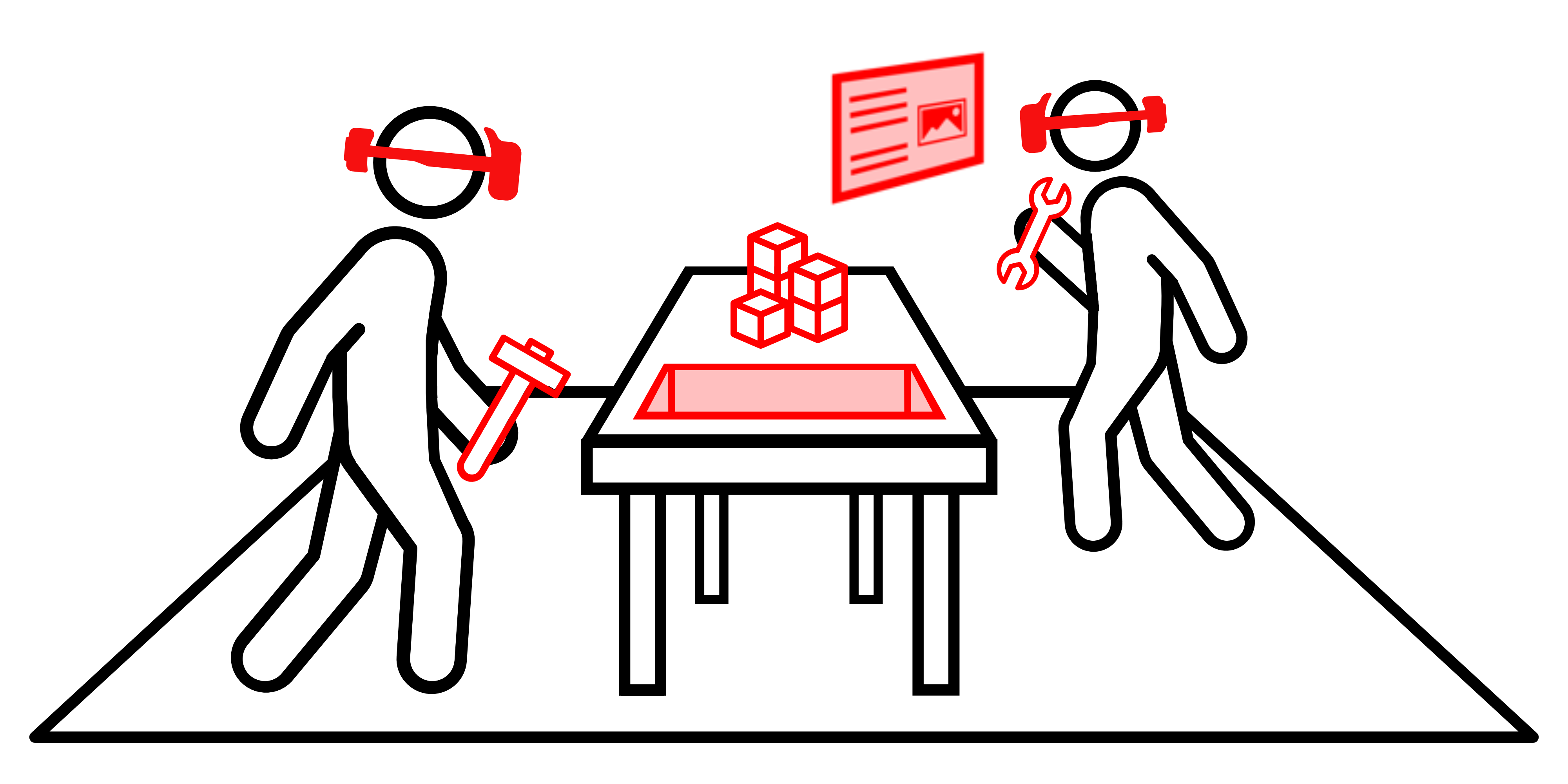
I entered this project mid-way as a post-doc researcher, mainly focusing on making VR/AR prototypes for testing time perception modulation. One of my major contributions is XR MUSE, a Unity framework co-developed with my colleague for networked multi-user collaboration in a mixed-reality shared space. Upon finishing the development, we open-sourced the code as Unity packages to facilitate other researchers' experiment setup. See our publication (XR MUSE: An Open-Source Unity Framework for Extended Reality-Based Networked Multi-User Studies) for more details about this framework.
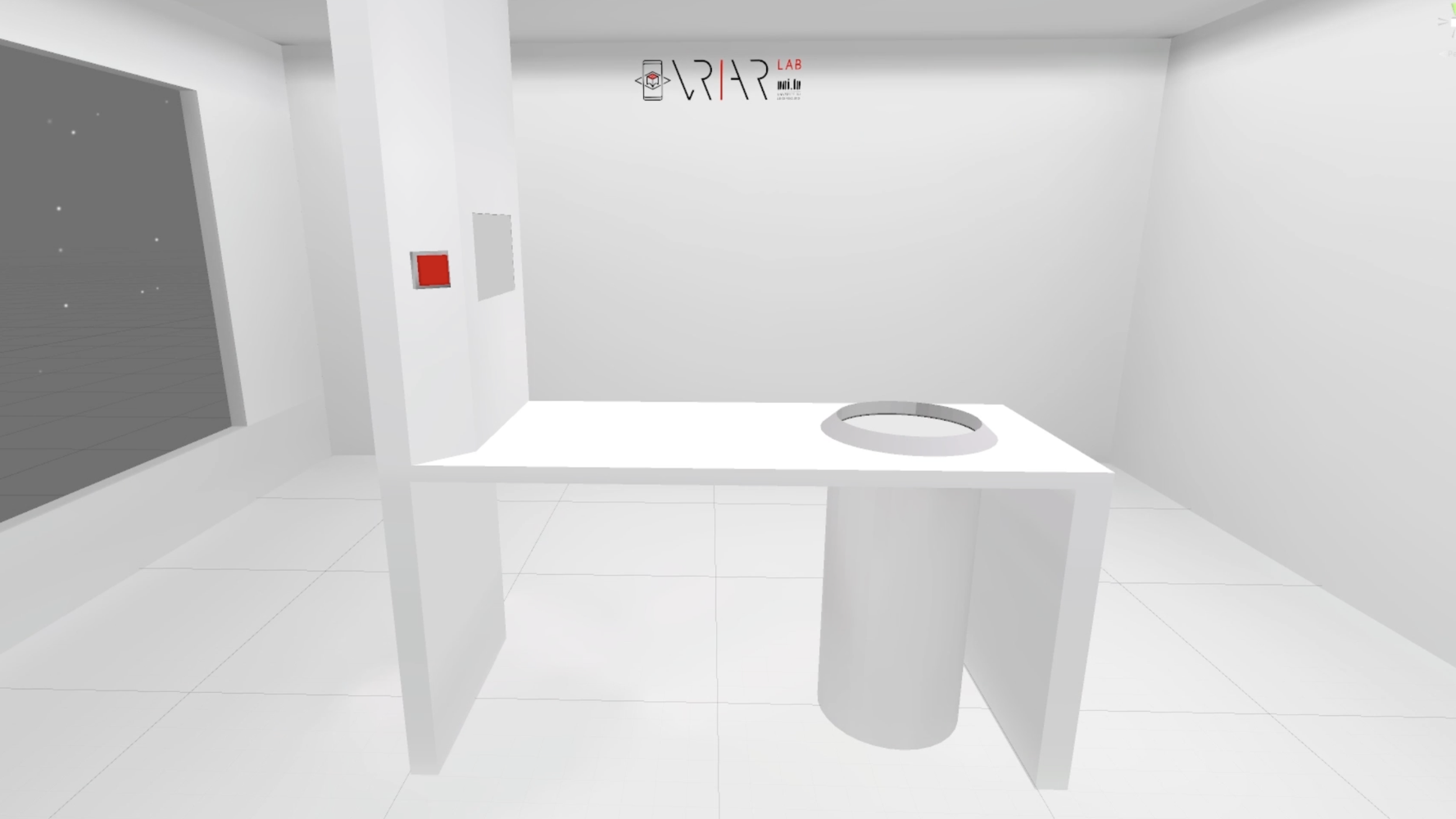
Another research topic we have worked on was the impact of gravity on time perception. To simulate different gravitational contexts, we developed a minimal virtual environment for VR, as depicted in the picture below. Experiment participants were instructed to carry out some basic tasks in this environment under the influence of different virtual gravity setups. The results were published in several academic venues related to time perception.
Associated Publications
- Picard, S., Sun, N., & Botev, J. (2024). XR MUSE: An Open-Source Unity Framework for Extended Reality-Based Networked Multi-User Studies. In Virtual Worlds (Vol. 3, No. 4, pp. 404-417). MDPI. [link]
- Jahanian Najafabadi, A., Botev, J., Sun, N., & Kroger, C. (2025). Virtual Tool Embodiment in Simulated Gravity Conditions. In Proceedings of the 17th International Workshop on Immersive Mixed and Virtual Environment Systems (pp. 65-71). [link]