DELICIOS
Delegation of Decision-Making to Autonomous Agents in Socio-Technical Systems (DELICIOS) is an international research project funded by Research Foundation Flanders (grant number G054919N) and Luxembourg National Research Fund (grant number 12635165), carried out between 2019 and 2023 by Ghent University, Vrije Universiteit Brussel, and the University of Luxembourg.

My role in this project was to investigate whether and how mediated-reality technologies (e.g., VR/AR) and agent designs influence users' delegatory behaviors toward agentic AI. A series of human-computer interaction experiments was carried out to answer this question, based on which a theoretical framework was proposed for modelling the delegatory relationship between human users and agentic AI. For more details, please refer to my thesis or the "Associated Publications" section at the end of this webpage. Below is a quick takeaway:
The literature on economics and management has demonstrated that delegatory relationships in corporate contexts can be susceptible to various factors and needs systematic regulations to remain efficient. With LLM-driven software agents showing near-human level intelligence and behaviors, these factors may similarly impact user-AI delegation. Thus, the user interface design for modern agentic AI should take those factors into consideration and balances their impacts.
Gallery
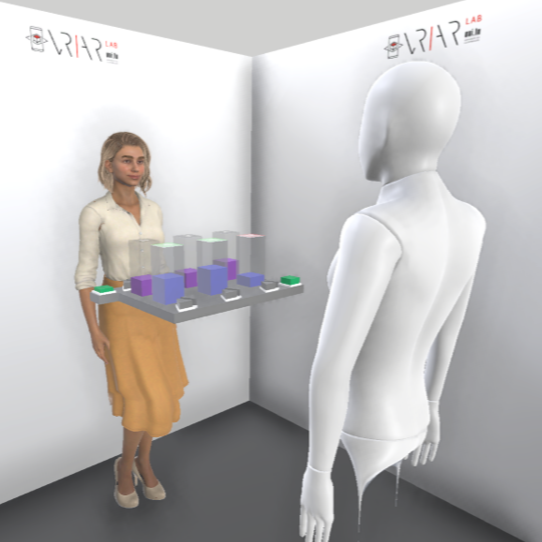
A study on behavior synchronization and rapport [7]. On the left is an embodied AI agent, and the white mannequin represents the user's avatar in VR.
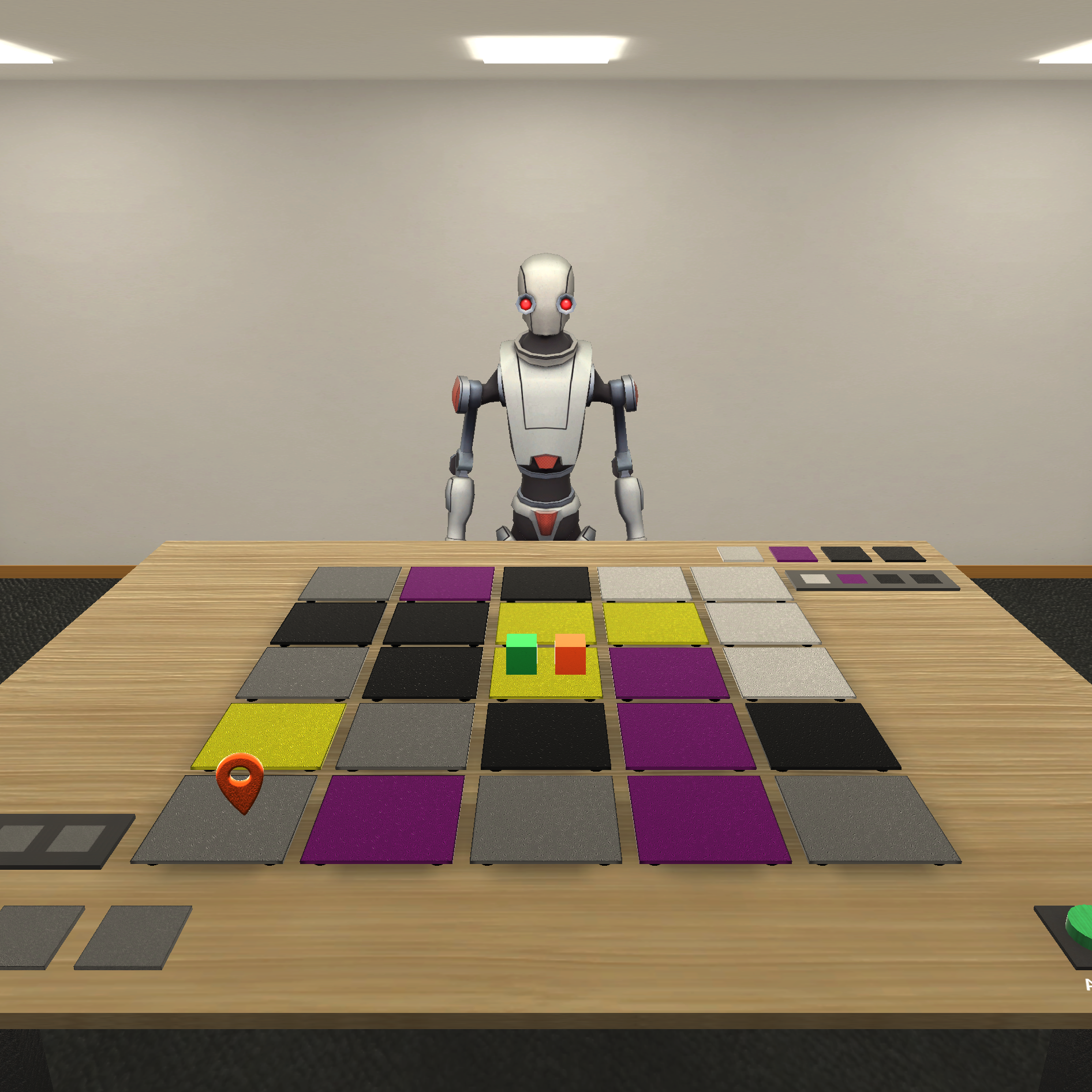
A study on theory of mind [5]. The picture shows the user's perspective of playing a theory-of-mind game with/against an agent.
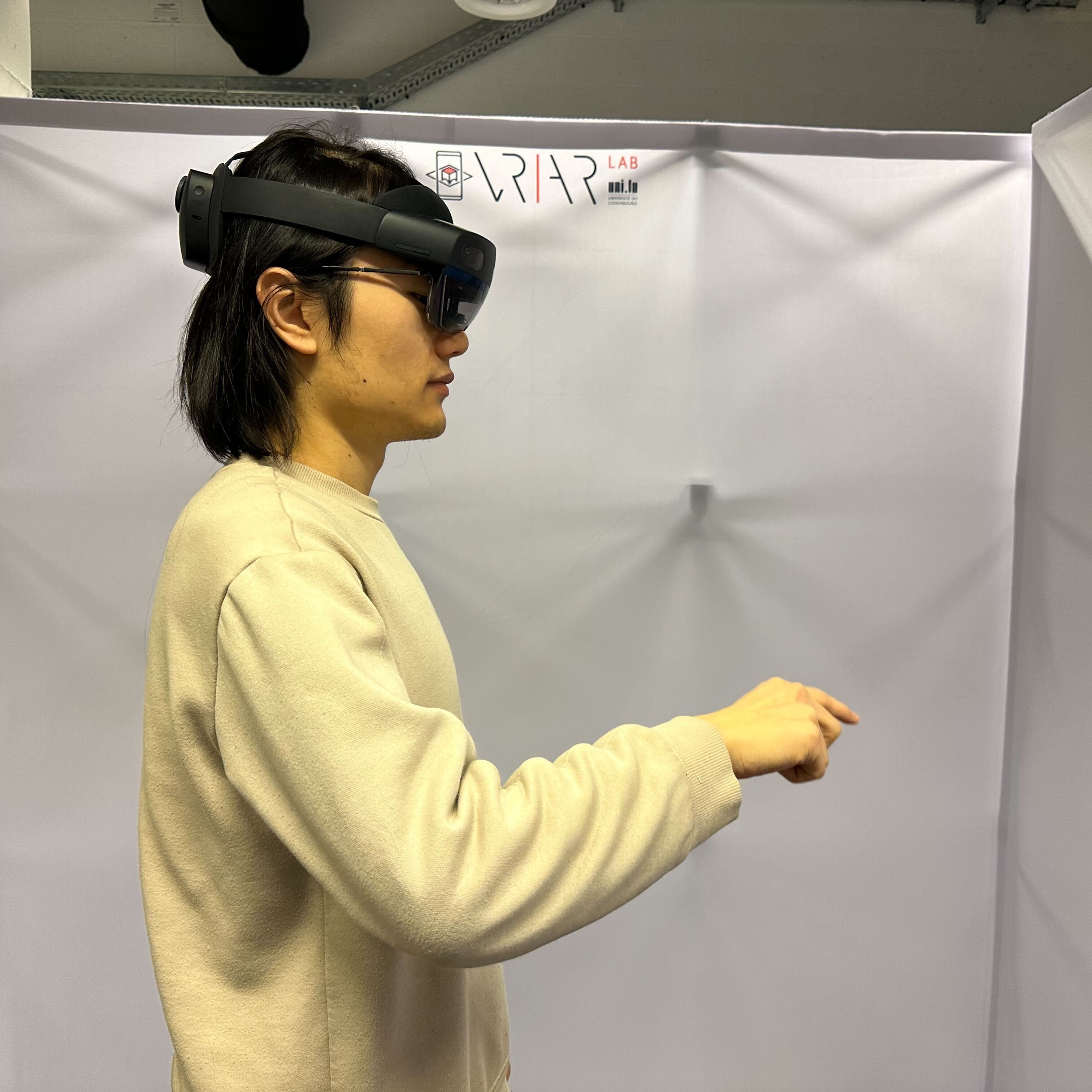
A study exploring the impact of media devices [6]. Me in the picture wearing a HoloLens headset and interacting with a virtual agent.
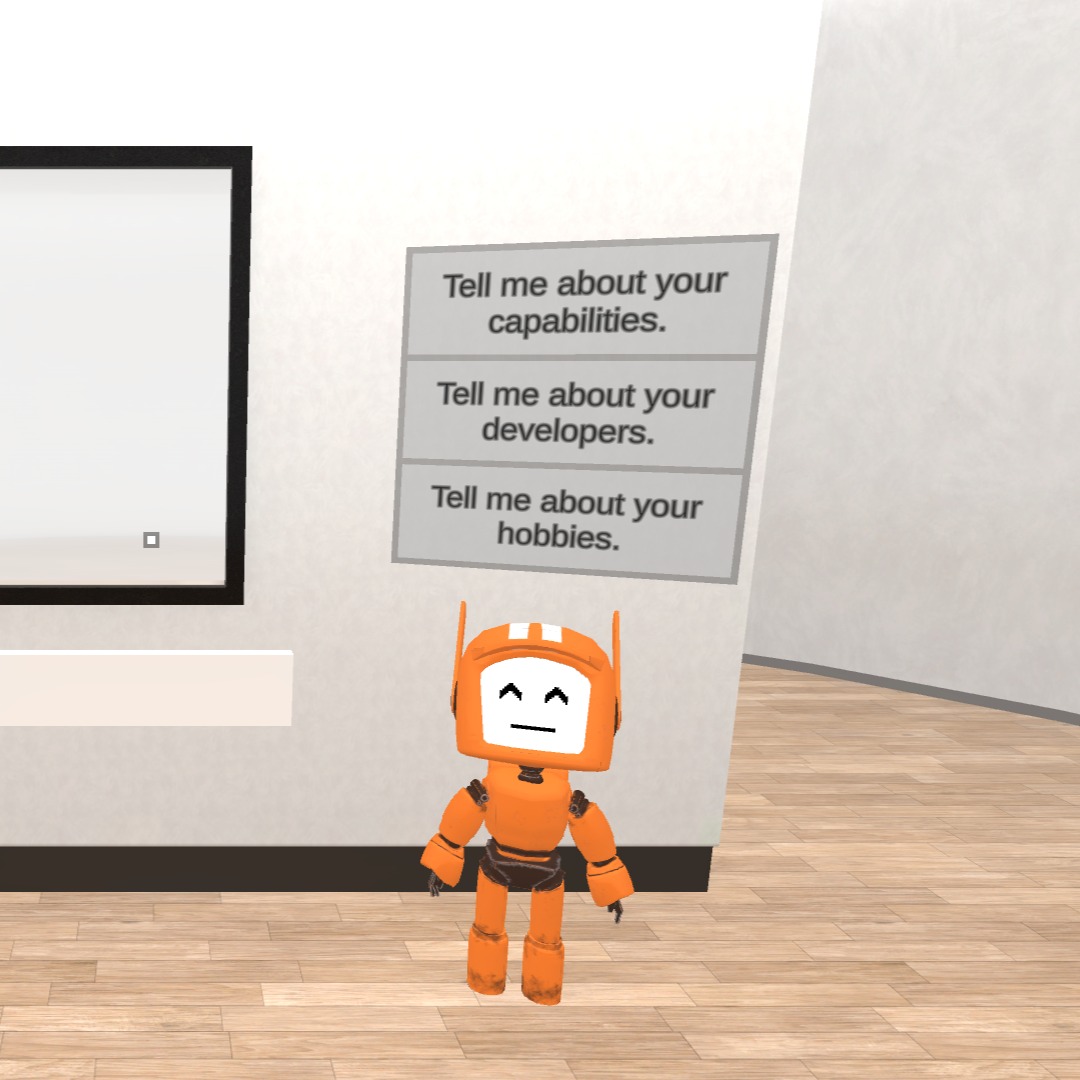
A virtual robotic representation used in one of the studies [6]. The robot is interacted with through a text menu for the purpose of controlling variables.
Associated Publications
- Sun, N., & Botev, J. (2020). Intelligent Adaptive Agents and Trust in Virtual and Augmented Reality. In Proceedings of the 19th IEEE International Symposium on Mixed and Augmented Reality (ISMAR) Adjunct (pp. 303–305). [link]
- Sun, N., & Botev, J. (2021). Intelligent Autonomous Agents and Trust in Virtual Reality. Computers in Human Behavior Reports, 4, 100146. [link]
- Sun, N., & Botev, J. (2021). Virtual Agent Representation for Critical Transactions. In Proceedings of the 13th International Workshop on Immersive Mixed and Virtual Environment Systems (MMVE) (pp. 25–29). [link]
- Sun, N., & Botev, J. (2021). Why Do We Delegate to Intelligent Virtual Agents? Influencing Factors on Delegation Decisions. In Proceedings of the 9th International Conference on Human-Agent Interaction (HAI) (pp. 386–390). [link]
- Sun, N., Botev, J., Khaluf, Y., & Simoens, P. (2022). Theory of Mind and Delegation to Robotic Virtual Agents. In Proceedings of the 31st IEEE International Conference on Robot and Human Interactive Communication (RO-MAN) (pp. 454–460). [link]
- Sun, N., & Botev, J. (2023). Technological Immersion and Delegation to Virtual Agents. Multimodal Technologies and Interaction, 7(11), 106. [link]
- Sun, N., Botev, J., & Simoens, P. (2023). The Effect of Rapport on Delegation to Virtual Agents. In Proceedings of the 23rd International Conference on Intelligent Virtual Agents (IVA). [link]
- Sun, N., & Botev, J. (2024). Digital Partnerships: Understanding Delegation and Interaction with Virtual Agents. In Y. Chen & E. Blasch (Eds.), Navigating the Metaverse: A Comprehensive Guide to the Future of Digital Interaction. IntechOpen. [link]